
|
Street and Municipal Sweeping: |
Street & Municipal SweepingBest Practices Forms Legal Operations Profiles Studies We appreciate any suggestions you might have for this section.
Click on the graphic above for an email window.
|
Table of ContentsDetermining Water Quality Differences Between Swept and Unswept Street SegmentsElizabeth Fassman-Beck, Engineering Dept. Head of Southern California Coastal Water Research Project (SCCWRP), is spearheading a current effort aimed at directly quantifying the water quality differences between swept and unswept street segments – they're doing empirical testing at field scale. Read about it.Caltrans Technical Memorandum: How Street Sweeping Reduces Urban Airborne DustCaltrans’ latest Technical Memorandum provides a comprehensive review of street sweeping’s ability to reduce urban particulate matter (PM) through advanced technology and modern operational strategies. The memo breaks down why dust on city streets matters, how new sweeper machines are shaping results, and what real-world studies reveal about actual air quality improvements. Read the analysis and link to direct study information.Street Sweeping and Asphalt Preservation: Evidence, Practice, and ValueDespite decades of field practice and several peer-reviewed studies, there is no published research that directly quantifies the years of service life added to asphalt due only to regular street sweeping. Instead, technical literature focuses on debris removal efficiency, environmental outcomes, and maintenance theory. This article provides the literature review information on the topic. Read the information.Street Dust: Implications for Stormwater and Air Quality, and Environmental Management Through Street SweepingThe linked study is an adaptation of Steven Calvillo's MES thesis summary of a study that examines the history and pick-up up efficiencies of different types of street cleaning technologies by gathering and critiquing past research by other authors. Read the information.Examining the Effectiveness of Municipal Street Sweeping in Removing Road-deposited Particles and Metal(loid)s of Respiratory Health ConcernOctober 2024: Conducted in Toronto, Canada, the study examined the effectiveness of regenerative air street sweepers in removing road dust and associated pollutants from arterial roads. The research aimed to assess how well street sweeping can reduce potentially harmful particulate matter and metal contaminants that can impact air quality and public health. Read the editor's synopsis; access the entire study.Los Angeles Controlled Testing Compares Pickup Ability of Regenerative Air and Mechanical Broom SweepersAugust 2024: In a controlled test, Elgin's RegenX regenerative air sweeper was found to be more than twice as efficient at pollutant removal than the company's Broom Bear mechanical broom sweeper. The sweepers were chosen as representative of their two technologies, regenerative air and mechanical broom. Read the information.Gothenburg, Sweden, Studies Street Sweeping Pollutant Removal
Study from 2018: discovered/posted 9.24: Gothenburg is the 2nd largest city in Sweden, after the capital, Stockholm, and the 5th largest city in the Nordic countries. It has about 1.1 million inhabitants in its metropolitan area.
Minnesota Moves Forward on Credits for Street SweepingDecember 2022: Studies confirm "the cost-effectiveness of removing phosphorous through street sweeping is breathtakingly low, on the order of, at some times through the year, less than $100/pound. That compares to thousands of dollars a pound for various other stormwater practices." Read about how Minnesota and New Hampshire are moving to join Florida in providing street sweeping credits for their permitted cities. Take a look at the groundbreaking info.Microplastics From Tires, Roads are Entering WaterwaysDecember 2022: New research from the University of British Colombia – Okanogan (UBCO) suggests that an increasing amount of microplastics from tires and roadways are ending up in lakes and streams. Almost 15 tons of tire and road wear particles may be transmitted to lake surface water each year, according to a modeling study from the University of British Colombia. Take a look.Microplastic Removal: Street Sweeping's Newest Challenge?August 2022: Florida (see study below) has shown that street sweeping is by far the most cost-effective way to remove overall particulate matter (PM), with an expense per pound that is over six times lower than the next best method, catch basin cleaning. Now, with microplastic removal from the runoff stream getting the attention it deserves, it seems likely that street sweeping will be a similarly lower cost solution to address microplastic runoff from pavement. Take a look at the study.Minnesota Cities Get MS4 Permit Credits for Phosphorus Removal Via SweepersOn May 13, 2021, a Minnesota-based webinar was held that showcased the latest study data from that state detailing its data on the cost-effectiveness of street sweeping for removing phosphorus (P). As a result of the study data, Minnesota is enacting a street sweeping credit system for its MS4 cities. Go to article and study link. (If you haven't yet, be sure to see the later, related article, linked at this one.)Florida Stormwater Particulate Removal Studies 2007, 2011 and 2019
The University of Florida/Florida Stormwater Association studies found street sweeping to be the most economical and dominant practice that MS4s can implement and optimize in order to maximize nutrient and particulate matter (PM) recovery benefits to urban drainage systems and the environment. The studies, which involved a total of 14 Florida MS4s, also showed conclusively that recovery of particulates matters!
Evaluating Stormwater and Sweeping on the World's Longest Floating Bridge
Paul Fendt, PE, is a water resources consultant who works for Parametrix, a 100% employee-owned ESOP organization that in 2019 was voted one of Washington State's Top 100 companies to work for. Paul has 36 years of experience in his profession and was chosen as a central figure in the three-year BMP development and monitoring effort on the world's largest floating bridge.
Seattle Study Catalogs Street Sweeping Effectiveness (2018)
In a previous article on the topic of street sweeping in Seattle, we learned that the City planned to double its sweeping program for 2016 in an effort to reduce stormwater runoff pollution.
Quantifying Nutrient Removal by Enhanced Street Sweeping (2014)
In the 140 lakes in the Minneapolis-St. Paul area, for example, only one has been delisted as a result of management success. For that and other reasons, city managers are taking a harder look at street sweeping as a potential way to lower nutrient loads by keeping leaves and other organic matter – like what is shown in the photo to the right – out of the wastewater stream. If you are involved in trying to attain compliance with EPA mandates in this regard, you will want to read this study that covers the city of Prior Lake, MN, a leafy southwestern suburb of the Twin Cities, which was conducted by the University of Minnesota thanks to an EPA grant. Go to story.
Quantifying Solids and Nutrient Recovered Through Street Sweeping in a Suburban WatershedThe primary objectives of the study were to quantify the influence of tree canopy (a source of organic debris), season, and street sweeping frequency on the quantity of solids and nutrients recovered from streets through street sweeping.Total solids and nutrient loads (TP, TN, TOC) were recovered in 392 street sweeping operations over a 2-year period in residential areas of Prior Lake, MN. Go to pdf. City of Ellensburg Study Provides Insight About Sweeping in Semi-Arid LocationsStudy from 2020: The significance of street sweeping frequency compared sediment accumulation in catch basins (and transport from catch basins) was evaluated by comparing the sediment accumulation rates during years one and two. Take a look at the study.
The Effectiveness of Sweepers as an Urban Stormwater BMP in Maryland (2013)The Maryland-based Center for Watershed Protection recently released a study that evaluated which urban stormwater practices provide the greatest nutrient and sediment reductions for the lowest investment. Although designed to help localities in the James River watershed more cost-effectively achieve the pollutant load reductions required by the Chesapeake Bay TMDL, the article offers valuable insight to any stormwater manager trying to minimize TMDL issues.Our interview with the head of the sweeping information portion of the study, Dr. Neely Law, offers an insight into the issue of "pickup efficiency" – over 90% for new generation air sweepers – vs. the much lower values typically assigned as "pollutant removal efficiency" for sweeping as a BMP. Go to story.
Sweeper Pickup Efficiency Testing Conducted for Glendale and Burbank California OfficialsThe push for a sweeping industry-wide testing protocol received a boost via a round of testing in August of 2011 financed by Glendale and Burbank, California officials.The regulatory driver for this testing is a Total Daily Maximum Load (TMDL) for the Los Angeles River that requires the Cities to reduce metals' concentrations in storm water. Go to story.
Potential Reductions of Street Solids and Phosphorus in Urban Watersheds from Street Cleaning, Cambridge, Massachusetts, 2009–11Material accumulating and washing off urban street surfaces and ultimately into stormwater drainage systems represents a substantial nonpoint source of solids, phosphorus, and other constituent loading to waterways in urban areas.In 2009, the U.S. Geological Survey, in cooperation with the Massachusetts Department of Environmental Protection, the U.S. Environmental Protection Agency, and the city of Cambridge, Massachusetts, and initiated a study to better understand the physical and chemical nature of the organic and inorganic solid material on street surfaces, evaluate the performance of a street cleaner at removing street solids, and make use of the Source Loading and Management Model (SLAMM) to estimate potential reductions in solid and phosphorus loading to the lower Charles River from various street-cleaning technologies and frequencies. Go to study.
Real World Street Cleaner Pickup Performance TestingA great deal of controversy surrounds the question of how much of the pollution found in urban stormwater runoff can street cleaning remove? For an accurate assessment of cleaning effectiveness, pickup performance data is needed for the various street cleaner models currently available. Results were published in early 2011. Go to story.
Seattle Pilot Study Quantifies Sweepers' Positive Effects on Water QualityLike other coastal areas of the U.S., Puget Sound is facing an increasing level of degradation created by point and non-point source pollution. In the summer of 2006, Seattle Public Utilities began a one-year street sweeping study that determined that sweeping was effective as a front-line pollution prevention BMP. Results were released in mid-2009. Go to story.
Sweeper Test Results Highlight Positive Impact of Sweeping on Reducing Storm Water PollutionElgin Sweeper, the leading manufacturer of street sweepers in the United States, has released results of a sweeper test performed by an independent group of storm water control experts, headed by Roger Sutherland, president of Pacific Water Resources, Inc. The results demonstrate the efficiency of Elgin Sweeper street sweepers in removing storm water pollutants. Go to story.
Deriving Reliable Pollutant Removal Rates for Municipal Street Sweeping and Storm Drain Cleanout Programs in the Chesapeake Bay BasinThe Center for Watershed Protection collaborated with a number of agencies, with the intent of quantifying the pollutant reduction that can be achieved by street sweeping and storm drain cleanouts. All of the information was used to provide locally-derived pollutant removal reductions for street sweeping and storm drain cleanout practices for Chesapeake Bay communities. Go to story.
Brake Pad Partnership Seeks to Remove Copper From Stormwater RunoffThe problem the BPP group is addressing is to gain a better understanding of the role brake pad wear plays in putting copper into waterways. Information includes study results showing capability of sweeper to remove copper from runoff stream. Go to story.
Seattle Study Focuses on Water Quality'Seattle Street Sweep' is a pilot project ongoing in 2006 - 2007 designed to evaluate best practices and new technology to improve the health of Seattle's waters. The link is to an interview with the study director that discusses the study design and other parameters. Go to story.Toronto Assessment Project Moves Fleet From Mechanical to Regenerative AirAfter compiling test data, City of Toronto staff conclude that a 92% combined surface and air removal efficiency could be achieved with the use of a regenerative-air street sweeper. This would translate into an estimated 35% improvement in PM10 content of ambient air citywide once they implement their 50 sweeper fleet away from the current mechanical broom and into regenerative-air street sweepers. Go to PDF study criteria or to staff report.
Street Sweeping – State of the PracticeMinnesota's Ramsey-Washington Metro Watershed District has compiled one of the most comprehensive 'State of the Practice' documents on sweeping. This information was initially published in June of 2005. Go to story.
Residential Street-Dirt Accumulation
Rates and Chemical Composition, and
Removal Efficiencies by Mechanical- and
Vacuum-Type Sweepers, New Bedford,
Massachusetts,
New Bedford study concludes that street-dirt-accumulation rates, street-dirt chemistry data, and street-sweeper efficiencies can be used to estimate the potential benefits gained by implementing a sweeping program.
Go to story.
|
 |
© 2006 - 2022 World Sweeper |
Street and Municipal Sweeping Table of Contents
Site Map / Table of Contents |
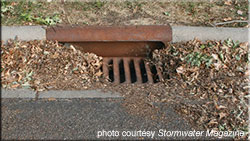 Stormwater Magazine offers an article that tackles the difficult subject of quantifying the effects of enhanced street sweeping. For over a decade, the US EPA's Stormwater and NPDES programs have encouraged cities of over 10,000 to clean up polluted stormwater runoff. The widespread problem, however, is that even with significant resources being spent to address the pollution issues over the past decade, many have not achieved nutrient reduction goals.